Car Rides Can Be Peaceful!

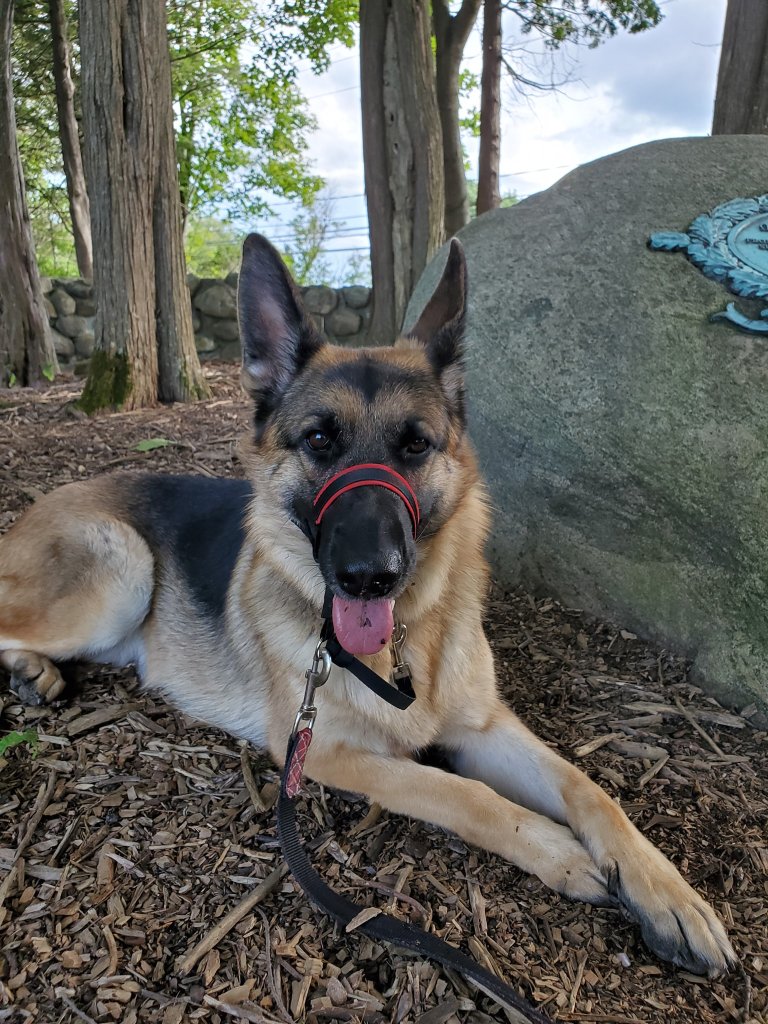
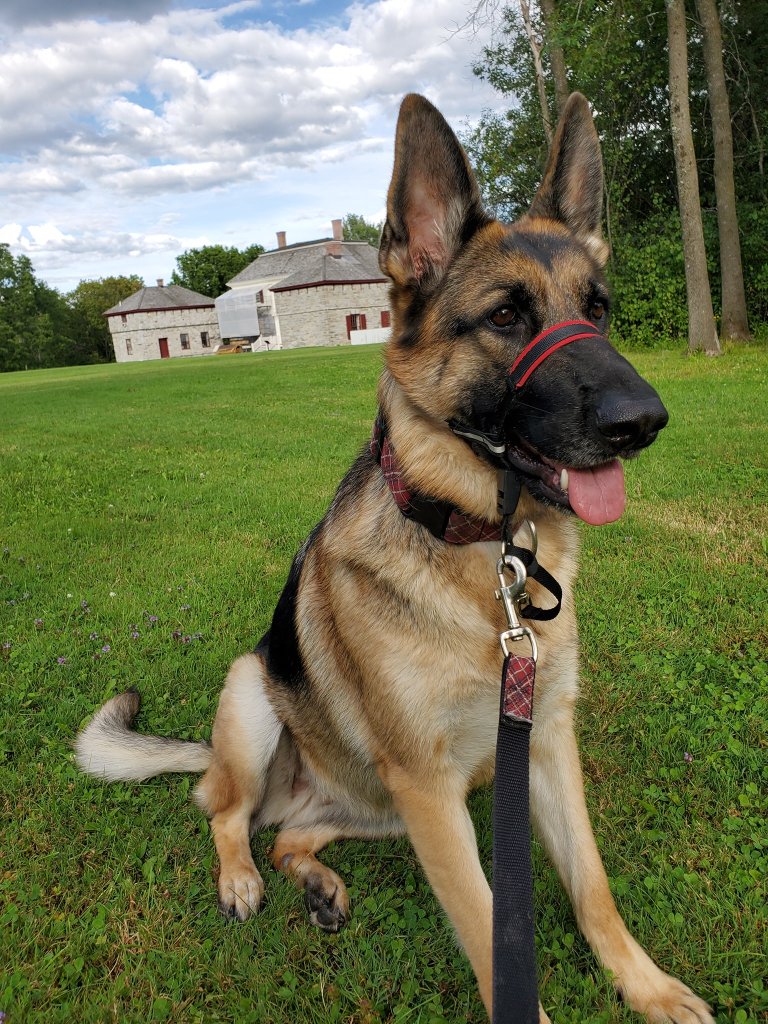
Would you like to know how to make this happen? It’s probably easier than you think. While my dogs are not perfect, more often than not, when we go for a drive whether 5 minutes away or a 45 minute road trip, you wouldn’t even know I had 2 dogs in the car. It’s pretty nice to know that they can remain calm, in a down, with the windows open and not in my face or trying to get in my lap while I’m trying to drive.

So, how do you get your dog to do this? Down-stay duration work. What’s that? Practice at home with minimal distractions and asking your dog for a down and work on the stay command. As your dog does well working on this part, start adding distance with one step away, then 2 and so on. Once they can handle the distance, start adding duration from 1-2 seconds, to 10, to 30 and so on. Take this command outside where there’s more distractions and again build up the distance and the duration. Once they’ve got this down, put them in the car and do it again. It sounds like a lot of work, it is, but if you have a good working relationship with your dog and have found something they find worth working for (real cooked chicken maybe?), you’ll find this easier than you thought. Anything worth having won’t come easy or without effort. Having a dog who can ride calmly and safely in the car is definitely something worth putting in the effort.

Rocco

Just had my last session with Regional alum Rocco! He came to the shelter an unruly but adorable little troublemaker. He was adopted by his dads who knew they needed to get off on the right foot with him because he is a big boy and could easily hurt someone even unintentionally. We did 4 weeks of in-home basic obedience. Specifically working on the walk and his destructive behavior. He still has some work to do but they have accepted and tried all of my advice and there has been improvement. He no longer finds the house to be a giant chew toy, he has made marked improvement in accepting the crate and after finding the right tool, walks are getting easier. Grateful that they love him to pieces from the moment they met him and are willing to do whatever it takes ❤

Crate training

Crate Training.

It’s not the easiest or most fun thing to do and working with 2 rescues it’s a constant topic of discussion with new or potential adopters on the dos and don’ts and “why do I need to crate my dog?”.

So, why do you need to crate your dog or at the very least why should your dog know how to be crated safely? Let’s talk about this category 5 hurricane currently coming up the coast. You and your family and your dog need to relocate. You’re probably going to stay in a hotel or with family or friends and your dog is going to be stressed and confused. Some, if not most, hotels will require your dog not be allowed to free roam in the room while unsupervised to prevent damage. If your dog isn’t crate trained, this becomes an extra stressor on everyone, now including your hotel neighbors. Most people don’t think about natural disasters when it comes to basic training but should. Or, god forbid, you are displaced from your home for other reasons and you just simply need to board your dog. Boarding an uncrate trained dog is not fun. It is not safe and it causes additional stress in times of already high stress. If only there were a way to fix this 🤔

Now think about this. You enjoy your space and alone time, right? Have you ever considered that maybe your dog would like a space of their own? A space that communicates to you that your dog doesn’t want to interact right now. That there is too much stimulus and they need to decompress? Did you know the crate can provide this?

Crate training is not my favorite thing to do but every single dog that comes through my home will be crated. It is for their safety and their sanity. It teaches them structure and boundaries. My dogs don’t associate the crate with punishment. They get fed their meals in their crates if we aren’t training. They are free to hang out in their crates whenever they please, and they often do. More importantly, they are crated when we are not home or able to supervise. This prevents fights, destructive behavior and anxiety to consume them.

I am not saying that your dog MUST BE CRATED ALL THE TIME, but your dog should know how to be ok in a crate. Crating is such important tool to have and you never know when you will need it. The above are only a few of the many other reasons it should be done.

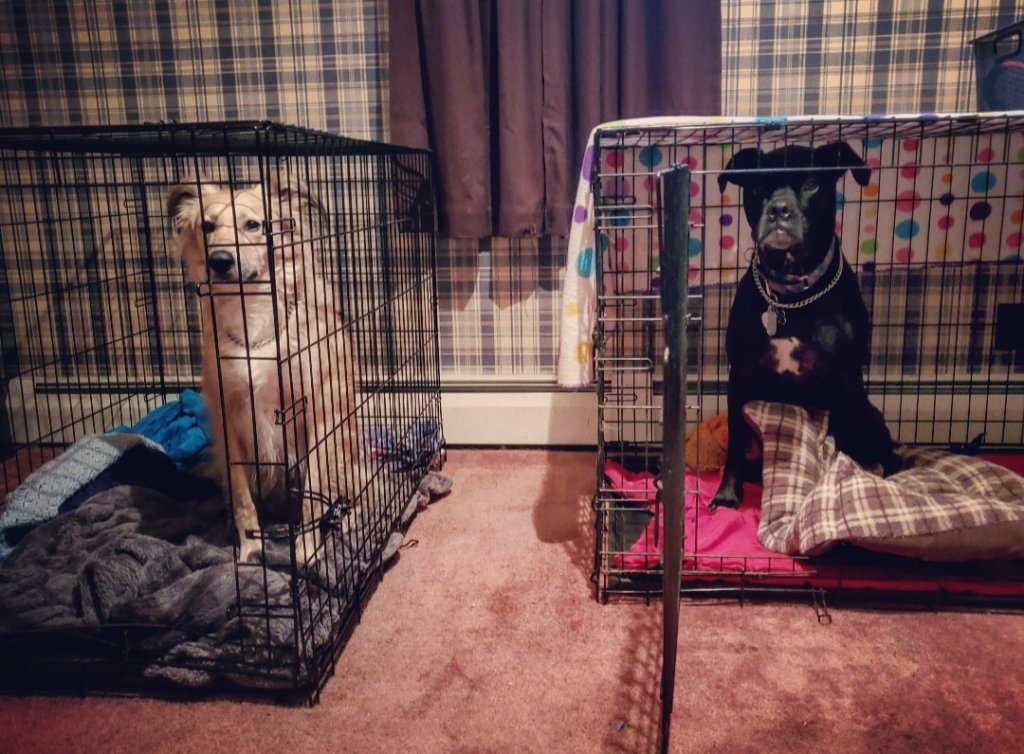
Pictured below: Tango and Athena waiting patiently for their food I’m holding hostage while snapping this photo.

Breed Makeup and Training

This is my girl Athena. We opted to have some fun and do her DNA and she came back as a bullmastiff, boxer, staffie mix which means she is a very strong working dog. Part of why she she excels at NDT is because of her breed makeup and also why I can use a prong collar on her.

Sadly, too many people incorrectly use prongs and choke chains and wonder why they are ineffective in stopping the pulling. Prongs and chokes should be worn up high on the neck, right behind the ears and should be held a little tight to keep the position… not tight as in applying pressure. The other way people incorrectly use these tools is they pull back on the leash/collar when they should be pulling straight up, like you’re lifting a dumbbell. Here I demonstrate the straight up movement and, non verbally, am able to get Athena into a sit. Once she is in the sit, the pressure immediately comes off the collar. While this method is not my first choice in tools to use, when used properly, they are effective in making the walk more enjoyable.

Tango and his harness

This is my boy Tango trying out the 3 in 1 harness using the front clip.

A little about him, some people know I volunteer with The Puppy Rescue Mission who works to bring over battle buddies for our military members. While Tango was not a “battle buddy” he was brought over from Qatar with his siblings by a PRM volunteer. Tango is a mix of Saluki and Canaan Dog, among whatever else lol. I say this because when exploring training options, it is important to consider breed. Tango is my sensitive boy. I could never put a prong collar on him and I would never even toy with the idea of an e-collar on him. I would lose this dog mentally and emotionally even using those methods correctly. Tango does not respond to any type of pain or correction. The goal is not to make my dog fear me.

Tango went through basic obedience during my mentorship using positive reinforcement/force free methods and this is what works for him and I. While I do do some NDT work with him, I stick to the basics using the “push” and “collecting” as well as box work.

Back to the harness. Walking Tango on a collar is a little bit of a nightmare. He is all over the place needing to smell this and that, cutting me off, pulling me left and right. Using the front clip harness, when he pulls, he feels discomfort on his shoulder which he does not seem to enjoy thus the pulling stops and he can walk loose leash next to me. If you prefer to use a harness on your dog, this is the one I would highly suggest. There is a back clip option as well but for those intense pullers, back clip is strongly discouraged. Message me if you’d like to know where you can get this particular harness

Working with Grace

Spent some time with Grace tonight. Working on her leash manners and bringing the focus back to the handler. We also decided to work on the “everything is a box” game. Need to work on improving your dog’s confidence? This is the game for you! Practice encouraging your dog to get up off their feet. Sounds easy, doesn’t it? This photo was Grace’s 4th try before she could finally do it. The box challenge isn’t physical, it’s mental.

Food Selections

I was asked tonight what I use for food and if it’s just treat based. The answer is no. My dogs do get treats for a simple sit here and there but when it comes to training time, I use actual food. I generally do a blend of their dry kibble with some higher value fixins mixed in.
Some of my favorites:

https://www.stellaandchewys.com/dog-food/raw-blend-kibble/cage-free-recipe?fbclid=IwAR3MvtEzJ03xWr1FH889qhOEOjNigtV89VoGLPSs48LKhX1C7mJOL_yM5Ok

https://www.chewy.com/tylees-human-grade-turkey-recipe/dp/135805?fbclid=IwAR0dB-GFPAT9kkz4hRLq2XdmJUBPtvjxqONlmrCtDoTbym-UYfPcf6w9ks0

Motivation

So I have an opportunity to add certified Natural Dog Training trainer to my list of accomplishments and I’m going to do everything in my power to make it happen! NDT is my thing with Athena. She is my rockstar and excels at the core work like its nobody’s business. NDT is not for everyone or every dog but the basic core work is a great fundamental base before starting any formal basic obedience in my opinion.

Here Athena shows her deep metered bark. My easiest explanation for this is a dog that can bark is a dog that is breathing. A dog that is breathing is a dog that’s not biting. Athena still has a hard time barking during high stress which means she is holding back energy that will ultimately come out in a bite.

Athena can also push or give me her energy on the “ready”. Ultimately our goal is to get a good push in a high stress time on a simple “ready”. Can your dog give you this much energy? Does your dog trust you to give you this much energy?

We also work a lot with collecting, which is her “collecting my energy”, you see this in the down as she pulls herself away from my food hand. She can also do this in a sit or on a box. This is important for impulse control. This shows most commonly as the “play bow”. Dogs that have a good balance can play bow each other, what happens after the bow is the important part.

You’ll also see me give her a check with the chain. It is important before starting to add the “correction” aspect alone that you check then treat. Check then treat. This gives the dog a positive association of the check to a good feeling.

Power Of Place

Place (or box in NDT world) is such a powerful tool. It gives your dog a place to chill but still be involved. It keeps your dog out from under foot while preparing meals. It provides structure and boundaries and helping your dog to self settle and that it’s ok to do nothing. If you teach your dog nothing else, place would be top of my list. While it may not be the easiest thing to teach, once your dog gets it, you’ll wonder why you ever waited so long to learn it! #calmdogscalmhome

Gracie

Would you believe that when I first met this dog, I thought I was going home with my first dog bite? Gracie is a 3 yr old GSD with some pretty intense stranger danger. She previously went through basic obedience and thankfully is crate trained so we had a good foundation to build on. I eventually won her over with patience and persistence (and freeze dried lamb!). We go at Gracie’s speed and we don’t force her into situations. We have been working on introducing her to new people and keeping those interactions calm and positive and she has shown improvement. Yesterday we went for our first walk together without her mom and even walked past several bikers with no reaction! Gracie still has a long road ahead but we’re happy with the progress made so far.