The Power Of Boxwork And Place

The power of boxwork and place. Regional’s adoptable Icy/Shadow is having a sleepover so she can attend an event tomorrow. This pretty pup is a hard no to living with cats. They are just too tempting to chase and most likely harm so we are just managing since it’s just for a night. Icy has a NDT foundation so putting her on one of the cots, she understands she needs to stay even though there’s a kitty just across the room. After a few, long, minutes, she has stopped vibrating and stopped fixating and is actually relaxing in the presence of Brinn. She is certainly not cured but with the right human in charge, this relationship could possibly shift to being able to safely cohabitate.

Icy is a very excitable pup, even at 5 years old. Her foster mom has been working on getting her to learn to settle but she just wiggles with excitement when meeting new people and it can be a bit overwhelming. Boxwork is going to be her potential adopters best friend at harnessing that energy.

Food Does Not Equal Love!

Being a dog trainer isn’t just about helping owners learn how to achieve a well-mannered pup. We also should be able to educate owners on non-behavior topics as well, such as food and weight. This is a pretty serious pet peeve of mine, seeing overweight dogs and their owners being oblivious to the dangers they are subjecting their beloved pet to. Food is NOT love. The recommended serving size on your dog’s food bag is just that, a recommendation. Every dog is going to have different needs when it comes to nutrition and while 3 cups a day might be good for one dog, it’s going to be considerably too much for another. There are also so many options when it comes to what to feed your dog and what you feed your dog counts just as much as the amount you feed your dog. The higher quality dry foods have more valuable nutrients in each piece than a lower quality food and therefore they don’t need as much. There is also so much information out there and accessible, there honestly is no excuse to not know better.

The more weight your dog carries, just like us humans, the more at risk they are for certain illnesses and ailments. Heart disease, breathing issues, diabetes, skin issues, and ACL tears are just a handful of the serious and often expensive health conditions you risk subjecting your dog to.

I’ll step off my soapbox now, but please do your dog a favor and stop overfeeding. He/She will thank you and you may just extend their time with you ❤

Boxwork

So public speaking is not my favorite so making this video was a little awkward so please don’t judge me too bad! Lol

Topic is boxwork. You’ve seen my posts about my dogs doing this and even my niece doing boxwork with my dogs but I’ve never explained it before. I don’t think you need to have a full understanding of Natural Dog Training to be able to implement this at home but rather just know how to properly do the motions with your dog and when to do it and I’m confident that you will see a shift in your dog’s overall behavior. If you have any questions, please reach out.

Learning From Loki

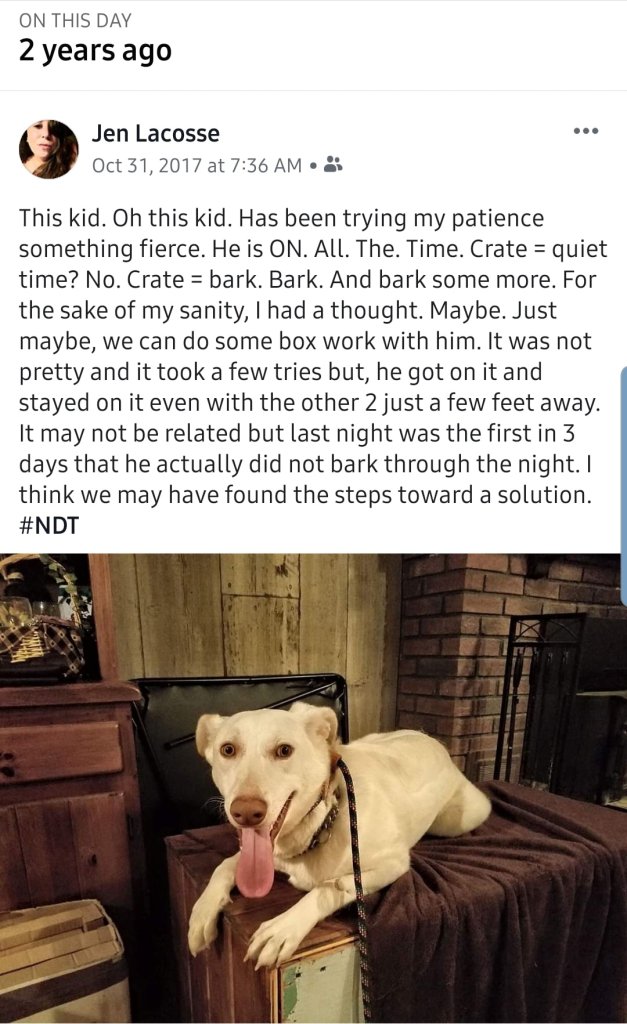
So this was 2 years ago when Natural Dog Training was still very new to me. Loki was a foster that we had at 6 months old, was adopted and came back 4 months later a complete disaster. George and I were on the verge of divorce over his non stop barking and whining causing serious sleep deprivation. It was not a pretty time. Had I known then what I know now, we would have done a lot of box work from day 1 to help him work through his anxieties. With the help of the rescue, he did spend 4 weeks with my NDT people and came back a much more enjoyable dog.

Before NDT, as this post indicates, Loki would constantly bark and whine in his crate. He would constantly pace unless he was snuggled with us on the couch. He had a lot of bathroom accidents. He was absolutely horrible in the car and if he was without my dogs, you could guarantee a poop within 5 minutes of the drive. He was also incredibly reactive to everyone on walks. Not very adoptable, right?

4 weeks later after some NDT work, he came back a lot more relaxed. The crate was no longer a source of anxiety. The accidents stopped. He rode in a down and quiet in the car. It was beautiful. Calm has to be the answer for dogs like Loki. I am so thankful for the help he was able to get and grateful for the tools I’ve been given to be able to help dogs like Loki now.

P.S. Loki has since been adopted into an awesome family and is doing great

Recall and Off-Leash Work

I think one of the most common things that I’ve been asked about is recall and off leash work. We got Athena August of 2015 at 10 months old and Tango in March of 2017 at 3 months old. Athena is incredibly human addicted and food or toy motivated that she was pretty easy to teach those invisible boundaries. Tango. Not so much. We have a nice 2 acre plot and even fencing in a portion of it is just financially not in the cards so Tango was looking destined to be on a tie out for his life. He just couldn’t be trusted to not chase after everything and boy is he fast! So how did we get here? Lots of work. Lots of patience. Nothing in dog training happens over night. I started the foundation while out on walks and every time my dogs made contact with me, they got a treat. Reinforcing that if they acknowledge my presence, good things happen. I would do this same thing while out in the yard. While they’re out and about sniffing and exploring, when they would make contact with me, they got rewarded. We also practiced making me the most awesome and fun thing to be around so why would they want to run off? We would play catch me and when they would chase after me, once they reached me, they got rewarded and we also added the side collar grab (because this is what you’d be doing if your dog actually got loose). Once I grabbed the collar, guess what? They got released back to play because if everytime you call, grab collar and go immediately back inside, you can bet your butt that your dog is going to avoid coming when called if it was ALWAYS the end of fun. Tango and I have been working on this for months, so when I say you need to have patience, you need to have patience. Off leash is certainly not for every dog but recall is something you and your dog should have a strong, solid relationship with.

Theo

Not a client but a client through default, Theo is one of the many adoptable dogs through Regional Animal Shelter showing us his leash and auto sit skills. Theo is a tough one. He came to the shelter as a stray and while we first thought he was an awesome bomb proof dog, over that last few months he has been slowly showing us the real Theo and that he may not be so bomb proof 😔 We have already had to take kids off his list and he needs slow, positive intros to men. He also lost kitties but I’m hoping to get that back with lots of positive exposure. He does have dog skills though which is fantastic for a pittie. Theo is going to need a strong, active person. Someone who isn’t afraid to use tools like a choke chain to walk him and as you can see, while he is super alert and scanning the environment, he can walk right next to me with no problem. This guy needs someone to set the boundaries from day 1 and let him know it’s absolutely not ok to act a fool when seeing dogs or people while out on walks or in a social setting. I didn’t film it, but after this walk, we went back to the yard where another dog reactive dog was in his outdoor run and we were able to sit and chat with some other volunteers while he sat calmly next to me until it was time to go back inside because I don’t allow him to call the shots. We are often way to easy and lax with our dogs and in doing so, we reinforce poor manners.

Advocating For Your Dog

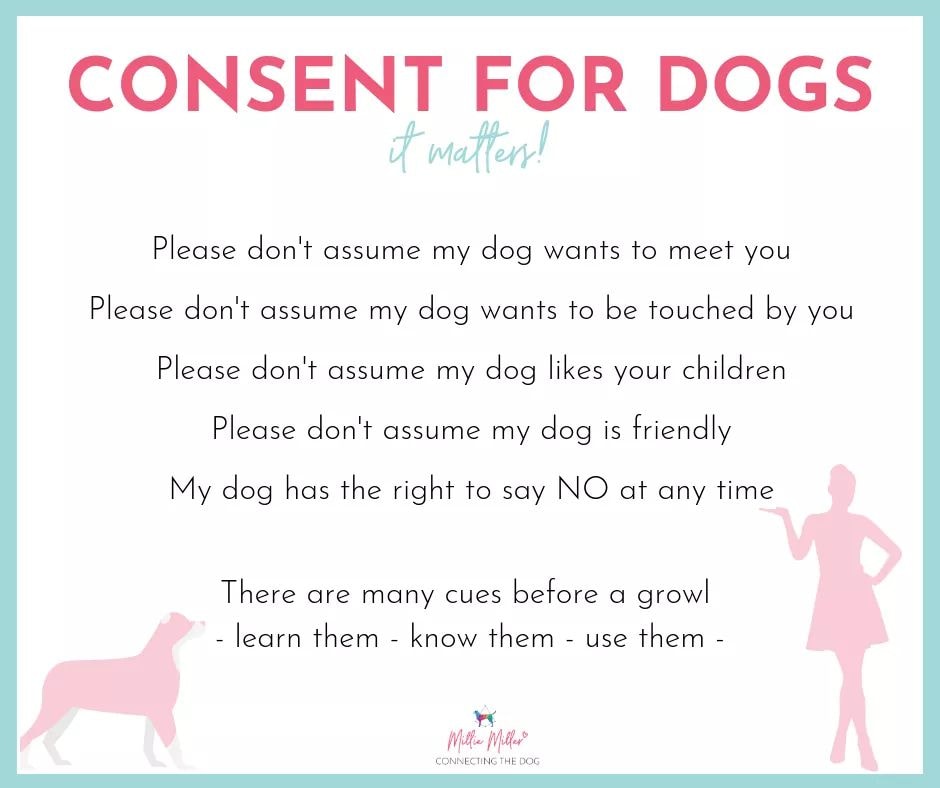
As responsible dog owners, it is our duty to advocate for our dogs. It is our duty to learn how to read our dogs. My first foster opened my eyes to how much I really had no clue and forced me to educate myself. We as humans force our dogs into situations that they’re not ready for and/or cannot handle and then wonder why it went badly. There are too many people out there that assume a wagging tail means a dog is friendly. Sorry folks, but a wagging tail can still produce a bite and then those same folks say the bite “came out of nowhere”. Nope. It didn’t. And they rarely do “come out of nowhere”. Your dog is talking to you all the time, you just didn’t listen. Learn the signs of stress in your dog and you’ll be better prepared to avoid unwelcome situations.

PSA: Side eye is not cute. Side eye is a warning sign and should not be ignored. This may be the only warning sign you get before a bite, especially if the growl has been punished out.

I keep learning!

I can’t be a good trainer if I’m not constantly learning and growing myself. Today I attended a workshop with my lovely friends at Paw it Forward and Rising Canine, the ladies who got me started on my journey to pursuing my passion. Athena is my project dog and while she excels at NDT and is easy to work with, we still struggle with her reactivity. Today we found a piece that has been missing and I’m hopeful that if we can work on improving this final piece, we may have the breakthrough I’ve been longing for.

“Down”

Using our walk tonight as a training opportunity. Athena has cost me a lot of money on professional training and it has taken a lot of work to get us where we are. Getting your dog to respond to non-verbal commands and focus on you and respond appropriately to given commands doesn’t happen overnight. Athena has learned that a quick, non verbal check on the chain means I want her in a down. Doing lots of down-stays and box work mean I can trust her while out on the rail trail to stay put as I walk away. Athena is already pretty human and food obsessed so keeping her focus isn’t generally a challenge. Our release words are “ok” if we’re moving or “ready” when I want her to connect with me and she knows the difference because we’ve worked hard on this.

In my limited experience so far, I’m finding too many people giving commands as more of a question and repeating down. Down. Down. Etc. and wondering why their dog isn’t listening. If you want your dog in a down, say it like you mean it. And if you have to ask your dog more than once or twice for a command, you need to step back and re-evaluate your tone, behavior and your dog’s body language in response. Your dog doesn’t naturally know what the words “sit” and “down” mean. These should be taught non-verbally first. We talk too much to our dogs and the meaning behind our commands get lost. Try working with your dog and not saying anything but lure them into the position you want. It may be easier than you think.